Thursday, November 29, 2007

Global cell phone use at 50 percent

According to Reuters, half of the World's population owns a cell phone


But 59 countries have over 100% penetration!

Click here to read the full Reuters article

"Worldwide mobile telephone subscriptions reached 3.3 billion -- equivalent to half the global population -- on Thursday, 26 years after the first cellular network was launched, research firm Informa said.

Since the first Nordic Mobile Telephony (NMT) networks were switched on in 1981 in Saudi Arabia, Sweden and Norway, mobile phones have become the consumer electronics sector with the largest volume of sales in the world.


'For children growing up today the issue is not whether they will get a mobile phone, it's a question of when', Newman said.

In recent years the industry has seen surging growth in outskirts of China and India, helped by constantly falling phone and call prices, with cellphone vendors already eyeing inroads into Africa's countryside to keep up the growth.

But although mobile subscriptions have reached the equivalent of 50 percent of the population, this does not mean that half the people in the world now have a mobile phone, since Informa said 59 countries have mobile penetration of over 100 percent -- where some owners have more than one phone.


According to the International Programs Center of the U.S. Census Bureau, the total population of the world reached 6,634,294,193 on Thursday.

At the same time 2,571,563,279 people were using the most widely used mobile technology, GSM (Global System for Mobile communications), according to global trade body GSM Association.

The second largest mobile technology, CDMA, had 421.4 million users at end September."


The North America is the biggest market for CDMA. I think that is one of the reasons why the US is not keeping up with the rest of the world so far as mobile technology is concerned.

Monday, November 26, 2007

QR Codes

Are QR codes leading the way to interactive learing on mobile phones?


QR codes seem to be big news in some circles.

With as many as 60 million phones around the world with QR code readers installed, QR codes are gathering recognition.

QR Codes are the '2D' bar codes that are becoming increasingly popular. These are already being used in education, I mentioned them earlier as being used in 'treasure hunt' style learning activities in schools. Here's a couple of links

"...you can scan the code, and your mobile device will fire up a web page. Wow."
wikipedia QR Code
clicmobile.com blog, Mobile 2.0 Categories: QR-codes
Macdonalds introduces qr codes on its sandwiches in Japan

eLearning Guild QR coded their DevLearn eLearning conference guide/
Research Paper: Using Mobile Phones and QR Codes for Formative Class Assessment
Hitoshi Susono, Tsutomu Shimomura


I separated out the last two as they are more associated with mLearning, whereas the others are flag-waving or marketing...

3d Interactivity on a mobile phone?

Wellington Zoo (New Zealand) is using advanced mobile technology to advertise the zoo


With this imaginative fusion of mobile and virtual technologies, you'll never see your phone in the same light again!

I found this on the Mobile Learning blog.

This video demonstrates what can be achieved by the convergence of mobile and virtual technologies. Created as a promotion for Wellington Zoo (New Zealand), it allows printed codes to “come to life” using a mobile phone. As you move your mobile phone camera around the code, a virtual 3D model rotates, pans and zooms as if it were an invisible spectre standing on the surface, viewable only through the camera lens:


View the entire article

Sunday, November 18, 2007

mLearning - the thing of the future?

I've been interested in mLearning for the last 5 years


Since long before it was called mLearning. Following is an extract from my MSc thesis, written at the start of 2006, discussing mLearning.


Abstract
Research has show that PDAs, mobile phones and other mobile devices are becoming increasingly popular as tools for delivering training and education resources. The popularity as given rise to the term mLearning – mobile learning (Steve Chi-Yin Yuen, 2004, Harry Ketamo 2002 and others).

This project explores the use of PDAs as devices that can deliver highly interactive training to users. In addition to researching existing projects the developer has created a proof-of-concept application that demonstrates the potential of PDAs as tools for delivering highly interactive and engaging training applications.

The resulting product successfully shows the potential of the PDA as a method of delivery of a complete multimedia educational application.


1 Introduction

Over the last few years the PDA has evolved from an electronic address book to a powerful and versatile pocket computer. Where once it was amazing to see one of these machines hold more than 100 names and addresses, they are now commonly used to surf the internet, read email, read books, play music, play video, read and create ‘office’ documents such as word processor, spreadsheet and presentation documents and control the television in place of the manufacturer’s remote control and play highly interactive 3D games. With expansion cards, a high-end PDA can carry as much as 8Gb of storage. 1Mb is enough for an 800 page novel. 2Gb is ample space for thousands of documents, 25 albums worth of music, or around 25 hours of video.

The mobile phone has also evolved - from a brick-sized device, to one small enough to hide in the average pocket. The cheapest mobile phone has a sophisticated address book, can handle email, sending and receiving text and multimedia messages and will synchronise contact, calendar and message information with PC or laptop systems. “Texting occurs within and between nearly every social situation—driving, going to the theatre, attending classes—despite the abhorrently kludgey interface” (Bryan Alexander 2004). In addition to these features in ‘ordinary’ mobile phones, newer super phones, called Smartphones, are appearing in phone retailers. These phones combine all the power of the best mobile phones with the power of a mid-range PDA.

Owners of cell phones and PDAs do not usually know all that their devices can do because they have become very powerful devices. As the ubiquity of the PDA grows, now that every phone is essentially a PDA too, developers, users, businesses and schools are looking for ways to harness that power to improve their lives and productivity. Training is already an important target function, spawning the term mLearning, as can be seen by the wealth of academic literature on the subject.

Much of the current literature concentrates on delivering web-based content, (for instance Stephen J.H. Yang et al 2003) in part because it can be efficient in terms of file size. High-capacity, cheap memory cards mean it is possible to deliver large quantities of training to mobile devices by removing the need for an internet or network link. With individual memory card capacities are available with as much as 4Gb are affordable for consumer use, and as much as 12 Gb for the business or military applications , these cards have room for significant amounts of high-quality video and other multimedia. The Encyclopaedia Britannica already produces a PDA-friendly version on SD card.

Follow this link to view a larger extract Steve_Howard_MSc_EXTRACT.pdf

Been quiet for a while...

I've been pre-occupied with a number of things for the last year or so


And the Blog suffered for it.

But times they are a changing. With the end of development of Authorware announcement from Adobe, the eLearning industry is making some changes. At least, the niche I've been best known for over the last ten years is changing :-)

Watch this space as I move forward into new things.

Monday, December 19, 2005

The forgoten toll in Mississippi

The forgotten toll in Mississippi


New Orleans gets all the national coverage - what about Mississippi


Some telling figures from the Sun Herald newspaper

http://www.sunherald.com/mld/sunherald/13402585.htm

Katrina's toll in Mississippi
$125 billion Estimated dollar amount of damage caused by Hurricane Katrina
231 Identified dead statewide
5 Unidentified dead
67 Missing
65,380 Houses in South Mississippi destroyed
383,700 Mississippi insurance claims filed (Katrina and Rita)
$5 billion Claims paid (as of Nov. 21)
141,000 Insurance claims filed in South Mississippi
$1.3 billion Claims paid in South Mississippi
44 million Estimated cubic yards of debris in South Mississippi
21.8 million Cubic yards removed as of Dec. 5
20,447 Red Cross staff and volunteers in Mississippi
5,543,006 Red Cross meals served
42,768 People sheltered by Red Cross
229 Red Cross shelters opened
$185 million Red Cross money spent in South Mississippi as of Nov. 30

Wednesday, December 14, 2005

Adobe purchase of Macromedia

Adobe purchase of Macromedia


You probably want to know more about Adobe's purchase of Macromedia.


Today Adobe sent this to their various Team Macromedia members, Macromedia User Group managers and other prominent Macromedia community developers.


Dear Macromedia Community Members:

By now you most likely know that Adobe has finalized its acquisition of Macromedia, combining the leading-edge technologies of two pioneering software companies. We?d like to take this opportunity to let you know what the acquisition means to you as a valued member of our community and what you can expect from Adobe in the days ahead.

With the acquisition of Macromedia, Adobe is dramatically advancing its ability to deliver a platform that provides you with powerful solutions for engaging people with digital information. We are now better positioned than ever to assist you in meeting and exceeding your business requirements and goals.

Moving forward, we will bring together some of the industry?s strongest brands and most ubiquitous technologies, including Acrobat, Photoshop, Dreamweaver, PDF, ColdFusion and Flash. Customers who have relied on Adobe and Macromedia solutions will benefit from a consistent platform and common user interface, as well as the outstanding care they?ve come to expect from both companies.

At a high level, by bringing our technologies together, we will provide the community with the software solutions you need to meet the increasing demands of today?s competitive environment. Now more than ever, we are positioned to help you securely extend the reach of your information, business processes and services to engage and interact with customers and constituents online, via mobile devices ? by whatever medium you choose.

As you may know many of Macromedia?s leaders are now in leadership roles at Adobe. Kevin Lynch is now Adobe?s Senior Vice President and Chief Software Architect, Platform Business Unit. Kevin?s responsibilities include the Flash Player, Acrobat Reader, and Developer Relations. David Mendels is now Adobe?s Senior Vice President of Enterprise and Developer Solutions, and is responsible for products like Flex, ColdFusion and LiveCycle. Tom Hale is now Adobe?s Senior Vice President of the Knowledge Worker Solutions Business Unit, which includes Breeze and Acrobat. And lastly, Stephen Elop, Macromedia?s former President and CEO, is the President of Adobe?s worldwide field organization.

Our efforts with user groups around the world, developer events and conferences, and throughout the community will continue as they always have, and we?re excited about how we can enhance and expand our relationships with our development community.

We look forward to sharing more information with the community in the coming weeks. For more information about the merger, please visit www.adobe.com. If you have questions, comments, or concerns, please don?t hesitate to contact me directly, or any of your contacts on the developer relations team.

On behalf of all of Adobe, and the Developer Relations team in particular, I want to thank you for your continued commitment to our community, and I look forward to new opportunities to work together.

With best regards,

Sara Spalding, Director, Developer Relations

Sunday, November 06, 2005

More than the destruction we'll remember your smiles

More than the destruction we'll remember your smiles


A letter to the Sun Herald newspaper on November 6th


http://www.sunherald.com/mld/sunherald/news/editorial/letters/13094862.htm

More than the destruction we'll remember your smiles

To the citizens of Mississippi, All of you are still in our thoughts and prayers. We are one of the National Guard units from Indiana that was called upon to respond in a time of need for Hurricane Katrina. My unit was assigned to Gulfport as checkpoint security along the railroad.

No pictures could do justice to the damage and loss that you suffered from this hurricane. Yet, while dealing with how to pick up and start over again, you took the time to talk to us. You brought us food, drinks and ice.

But what you brought us that meant the most were your smiles and hospitality. We made a lot of new friends during a short period of time and regret that our paths may never cross again.

Just know that you guys are the best and you are in our thoughts as you continue your struggle to regain what you lost.


Sgt. 1st Class Robert Bratch, for

DELTA COMPANY, 1-293 INF
Huntington, Indiana

Monday, October 31, 2005

Some trees have changed in unexpected ways

Some trees have changed in unexpected ways


Lots of trees were damaged or destroyed by Katrina, but some seem to be getting a new start at life


I don't know much about indigenous American plants and trees, so if I am saying something that everybody knows already please forgive me - I've only lived here a year or so.

British Oak

In the wooded area we have at the rear of our parcel of land we have hundreds of oak trees. Not those huge magnificent oaks we love in Britain,


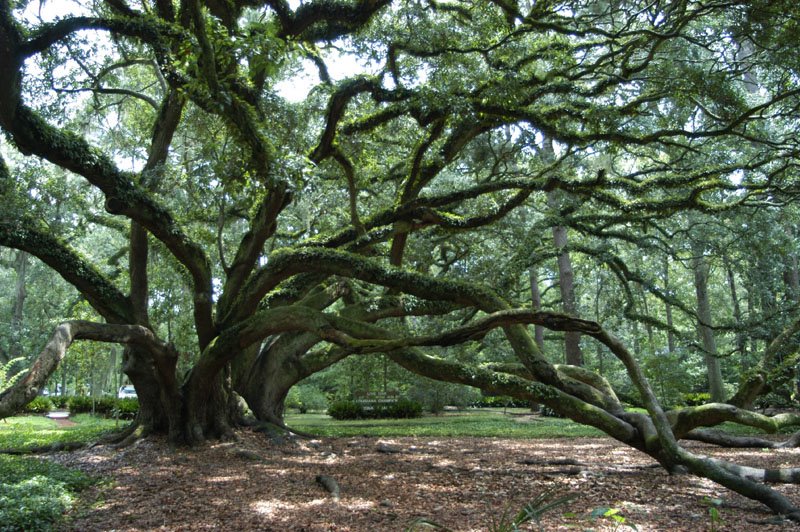
Live Oak

or the amazing twisted, sprawling 'live oaks' seen all over The South (so-called because they do not lose their leaves in the season they laughingly call winter down here), but boring, straight 'pole' oaks.

These are basically straight trees, reminiscent of pine trees, with a bushy bit on top that sprouts leaves that we would all recognise as relatively large oak leaves. We have literally hundreds of them. They are like weeds - it's hard to decide which is the bigger pest, pine trees or pole oaks.

So why am I telling you all this? Because lots of those straight, boring pole oaks are growing large numbers of leaves along the length of their trunks, presumably because the amount of devastation from Katrina means they are now getting light onto those trunks.


It looks kind of weird though. when I first noticed this I thought it was vines twisting their way up the trees - we also have enough vines to start our own jungle - but closer investigation revealed it was fresh green oak leaves.

I am interested to see how these trees look in a few years time ... will these new shoots survive long enough to become branches and eventually reveal a beautiful oak similar to what we are used to? Will they simply wither and die as the more normal dense carpet of leaves returns to our woods? Will something else happen? Time will tell.

Spring is in the air

Spring is in the air


They tell us plants get confused and have a second spring


... after a big storm like Katrina. Well I think we have seen a lot of evidence of this. Lots of trees have managed to regrow their leaves having been stripped bare by the terrible winds.

Today as I walked around snapping pictures of the progress made since the storm, I discovered our once magnificent, but now rather sorry-looking magnolia tree is doing its level best to add to the recovery effort ...


The magnolia tree is the rather sorry looking green mass to the left of center in the picture above.


But as you can see here, there is plenty of fresh green growth, and one magnolia flower about to bloom. Of course the tree is supposed to be in bloom in the spring and early summer, not in November!

Hopefully I can catch a photograph of the flower once it opens.

What about supplies for repairs?

What about supplies for repairs?


A friend and colleague asked about the availability of building supplies


So I thought I could talk a little about that here.

I want to specifically thank Home Depot and Lowes in Gulfport for being open fast and open with the right equipment! Right after the storm they had generators and chainsaws. Now, a few weeks later they have loads of power tools - saws, screwdrivers, wood chippers etc, and building supplies overflowing ... roofing shingles , sheetrock etc etc.

So in answer to any question as to how easy it is to get hold of building and repair supplies, the answer is ... it has been tough at times, but right now it does not appear that there is any shortage. Certainly there is no shortage for the sort of things I have needed.

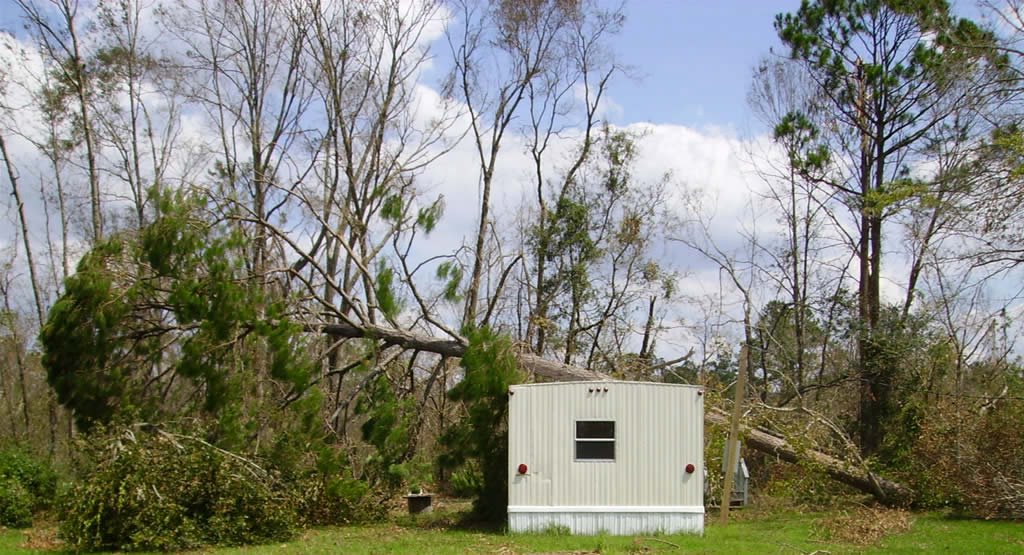
Speaking of repairs, I had a huge pine tree on top of a mobile home ...


Whilst our own home, and the house we own in Gulfport have escaped relatively unscathed, we did have a big pine tree fall on the roof of the small mobile home we have here for rent.


Amazingly there was very little damage. I was able to fix it with my rudementary skills! A little bit of wood, some sheet-tin, some pop rivets, some roofing tar and some Kule Seal paint to finish it all off ...


It's never going to look pretty, but there are a lot of homeless people around here right now. Hopefully we can help a small family get out of a tent and into something more weather-proof for the winter.

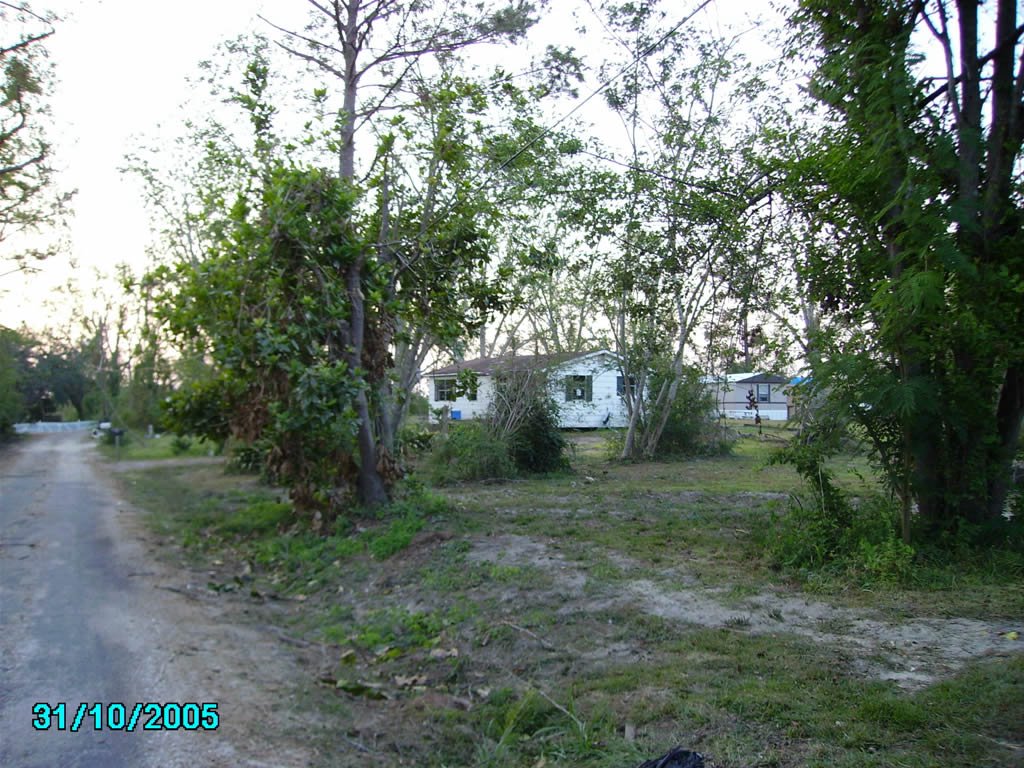
Driving up to the house

Driving up to the house


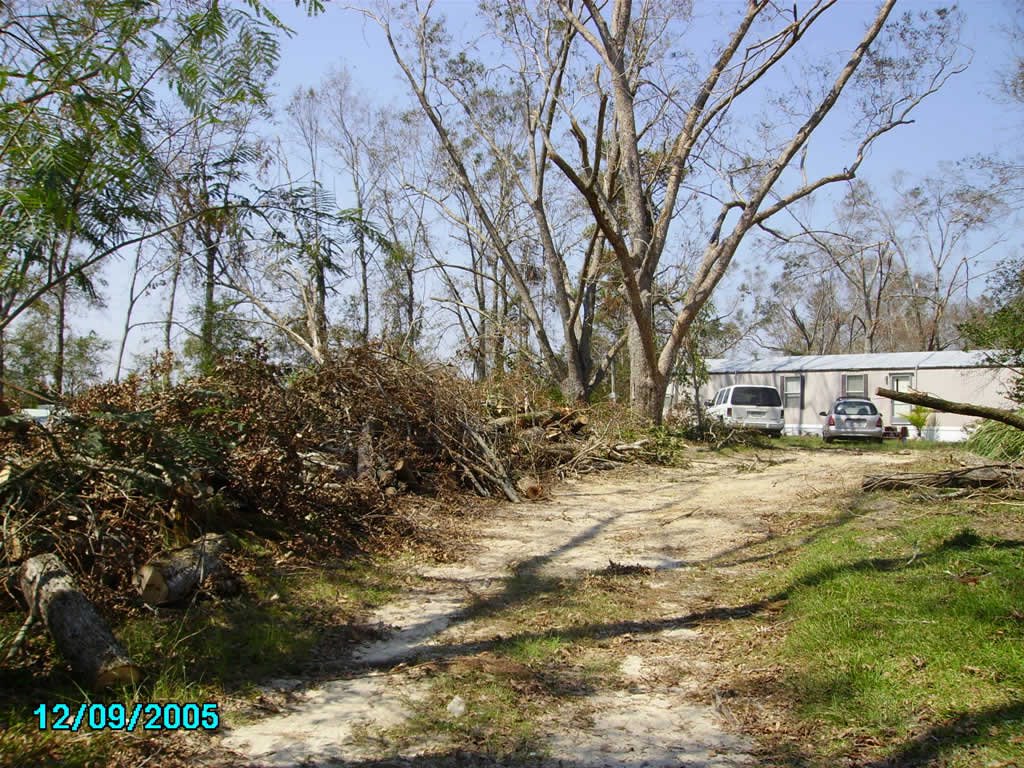
Changes to our driveway in the last two months


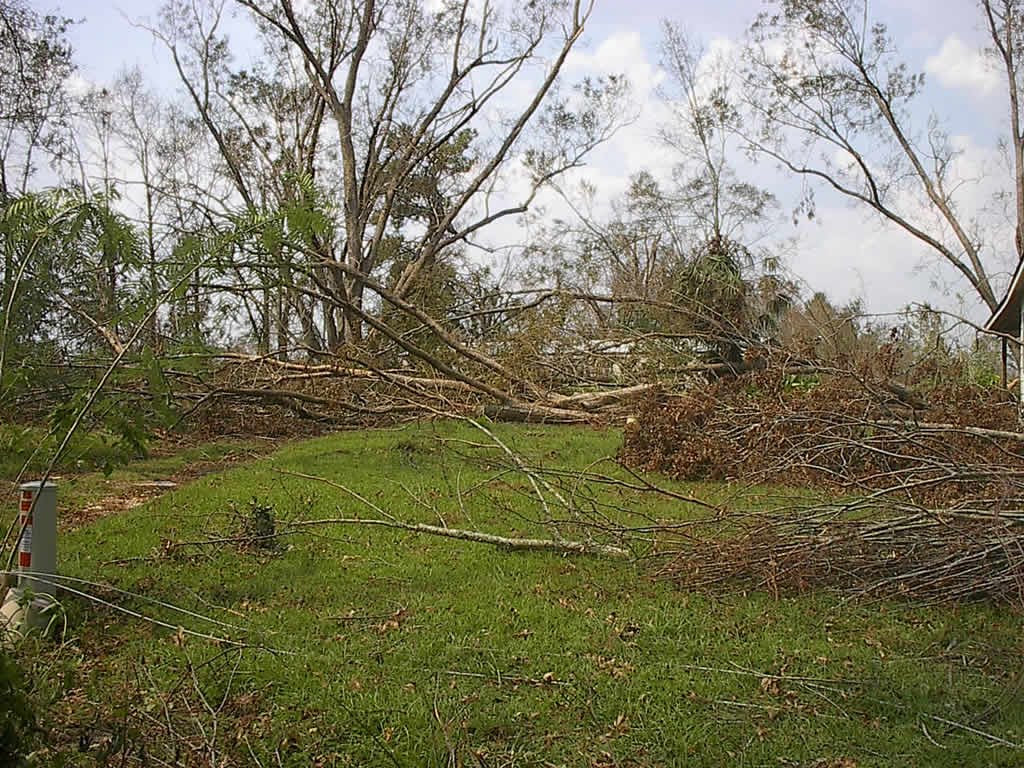
Katrina was kind enough to throw a lot of our trees into the driveway without actually hitting our home. Here's how things changed as clean up progressed.


Right after Katrina hit you could not even see our home from the street.


So the first job was to clear a path through the trees. A neighbour helped me here with te chainsawing - I did the lifting and moving of the chopped-up bits. I'd never used a chainsaw for anything like this at this point, so I figured it was safer to let an expert handle it, although he worried me a bit when I saw he was wearing open-toed sandals ...


As you can see the pile of wood is now gone from the driveway. I was very lucky again with this wood. I spent a whole day last week - Thursday I think - lifting and moving the cluttings of one heeeeeuuuuge pine tree that had fallen onto a mobile home we have for rent. Once I had almost finished moving the pieces to the side of the road, a county-employed cleanup crew arrived and started loading the wood onto trailers to take away to the burning area a few miles away.

I cheekily asked if they could help me out by picking up the wood that was next to my driveway - they are really only supposed to take the stuff that has already been moved to the side of the road - and they agreed. Nice one. They shifted it all in under an hour, but it would have taken me most of a day to move it out to the road myself. Thanks guys!

Picnic area update

Picnic area update


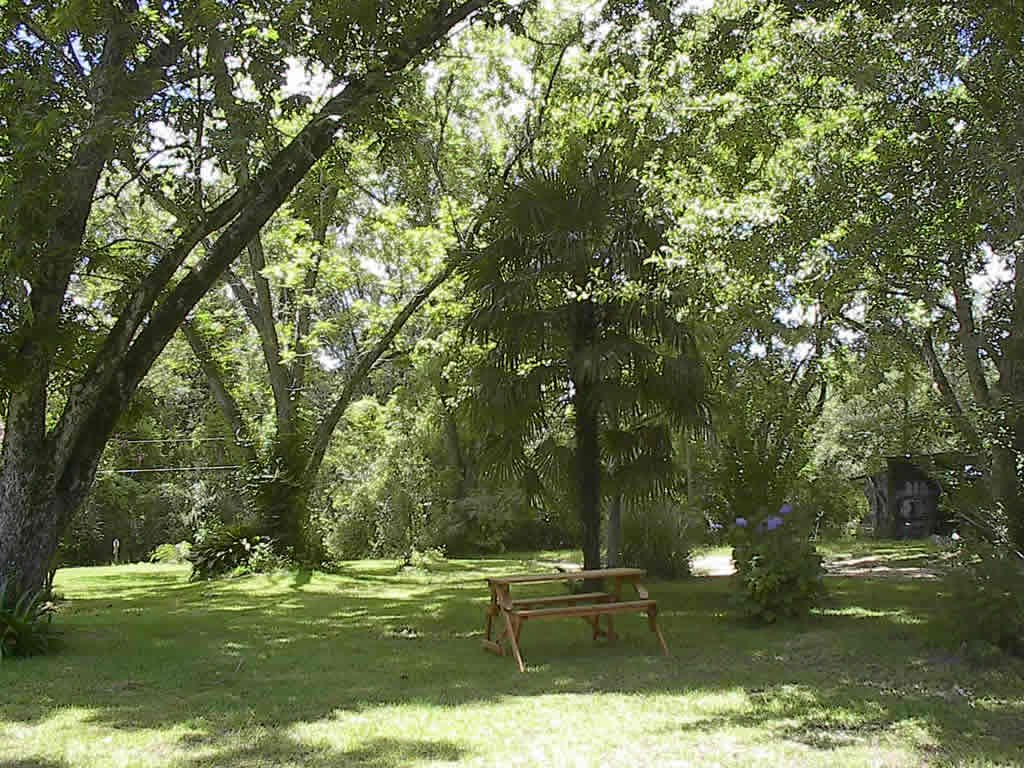
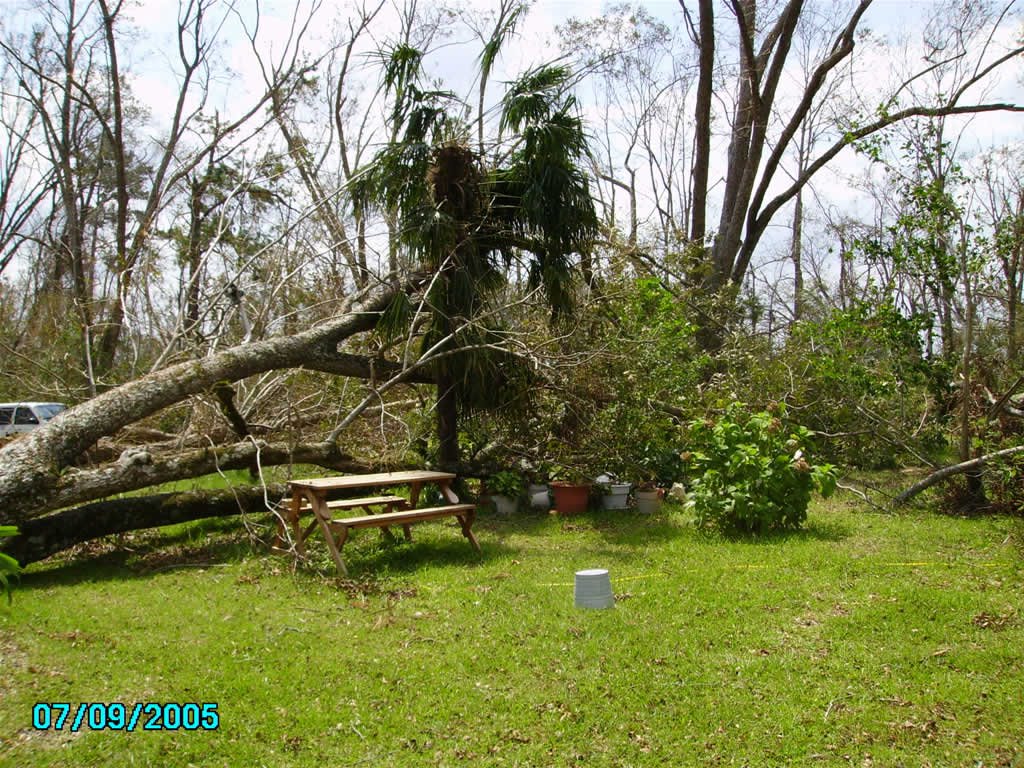
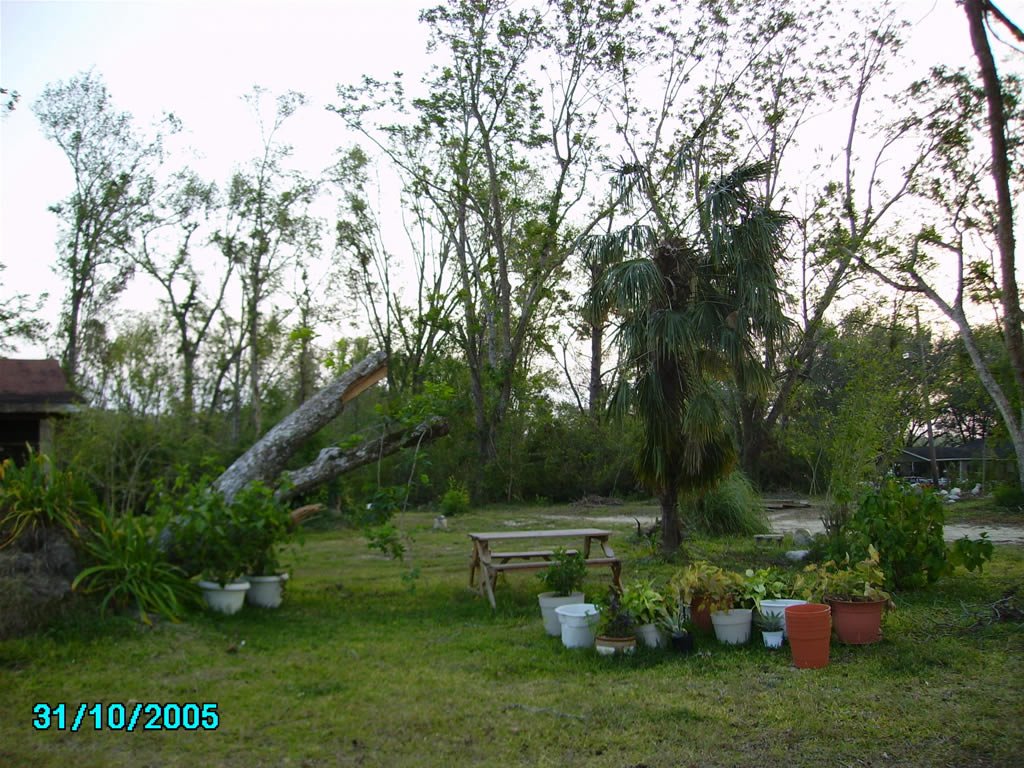
Here's three pictures of our picnic area. Before Katrina, just after and today ...


Before the storm Click to see larger image


After the storm Click to see larger image


Today Click to see larger image

There's still a long way to go here. we have lost all our shade trees from this area, and a large pecan stump remains for me to cut the final part and remove the stump. I can live with this as it is for now until even cooler weather arrives and I can work as hard as I like without worrying about heat stroke.

It's been a lot cooler ...

It has been a lot cooler here over the last week


So I decided to take advantage and work outside


Over the last week or so it has been (apparently) unseasonably cool here ... one day the daytime temperature was no higher than 60 degrees, but most days it has been more like 68-70. This week it is a little warmer, maybe 75 max. Net week it will be back to 'normal' at something like 80-85. It's November! So much for autumn ;-)

So I took advantage of the cooler weather and got outside for a few days to finish up some of the most needed cleanup and repair work that I just could not face while the daytime temperatures were over 90 degrees.

My next few blog posts will show some before/after pictures, or - more accurately - just after Katrina and 9 weeks after, now that I have completed nearly all the required cleanup.

For now, I thought I should entertain you with a photograph of a spider that has taken up residence just above my head-height in the path we have through the woods to our pond. We walk this way with the dogs several times a day. Good job we are not arachnophobia. This little critter is about 3 or 4 inches across...

Thursday, October 20, 2005

More interesting ideas

More interesting ideas


http://www.mississippirenewal.com/info/plansArchitecture.html

Planning presentations posted

Planning presentations posted


Presentations of the proposed plans for The Coast have been publishd


If you want to see what the planners are proposing for your area, take a look at the plans posted here.

Be aware that these are slides used by planners to present their thoughts to , I assume, the Governer's Commission. Sadly the planners did not feel it necessary to add a great deal of commentary to their images, so we are left to speculate over certain details, but there is still a lot of useful information to be gleaned.

Wednesday, October 19, 2005

WHAT IS A CHARRETTE?

WHAT IS A CHARRETTE?


Charrette (shä-r?e t´) n.


"A planning session that usually takes anywhere from several days to a week and incorporates the expertise of a variety of individuals. Some planners use this method when designing traditional neighborhood developments (TNDs). It is thought that by including as many community members as possible in the process, a better product is arrived at more efficiently. The term is derived from the French term for "little cart" and refers to the final intense work effort expended by architects to meet a project deadline. In Paris, during the 19th century, professors at the Ecole de Beaux Arts circulated with little carts to collect final drawings from their students. Students would jump on the "charrette" to put finishing touches on their presentation minutes before the deadline."

So why am I telling you this?

Well the local Governors Commission has been using a Charrette process to try to make rapid headway with plans for rebuilding the Gulf Coast so heavily devastated by Katrina.

The commission is putting together recommendations for the coastal cities, the counties and even the entire state of Mississippi. We have an opportunity here to clean up the image of Mississippi and rebuild its tourist center as a beautiful, attractive coastal region and the commission hopes to help formulate a plan to make that possible.

Today as part of that process they held a public committee meeting that, in essence, presented their progress to date (although I hasten to add that this was not a full report, but merely a discussion of 'work in progress'). What they had to tell us is reasonably well summarised in this report.

My own summary is as follows (and it is a severe summarisation)

- Rebuild the coast as a series of more traditional towns.
- Bring back the Town Center.
- Make building codes more strict.
- Go for blended zoning, so residential and businesses can be built together.
- Improve public transport.
- Make it possible to walk and cycle about the neighbourhood and have somewhere you can actually go to if you do!!
- Suggested building patterns (style guides for the web- and print-savvy among us) - a pattern book has already been produced and it will be available to everybody.
- Move the railroad tracks from the center of all the coastal towns to a more northerly location.
- Use the site of the current tracks tas the foundation for a new east/west highway that becomes a 'fast' route along the coast.
- Slow down highway 90 (the beach road that was mostly destroyed by the storm) and make it a sceneic boulevard - 50 miles long! - so the beach can again be an attraction.
- Make public access to the beach for work, rest and play easy and attractive.


There's more, but you get the idea. Again, to stress, these are ideas under discussion. No doubt they will evolve. Some things will fall by the wayside, others will be replaced or diluted. But t least, in my opinion, they are making a good and positive start.

It's just a shame that they have no real authority. The guidelines the commission comes up with will be exactly that - guidelines. Nothing they suggest can be enforced in any way unless local governments adopt them and apply them as local law, ordinance, zoning regulation or whatever the correct local terminoligy would be...

Wednesday, October 05, 2005

Nice to be out of Mississippi


Nice to be out of Mississippi

I've never really felt that way before ...

My wife and I are in North Carolina for TAAC - The Alternative Authorware
Conference http://www.markhenryenterprises.com/taac.html, where we will both
be speaking - and it is nice to be somewhere where all the restaurants and
shops are open :-)

And where the books stores are open! I was reading in yesterday's Sun Herald
that all of the major book stores on the coast were destroyed or flooded.
Barenes and Noble and Books A Million have bothe gutted their stores and
they remain empty as I type.

Thursday, September 29, 2005

Now for something a little lighter

Now for something a little lighter


You know those joke emails? I just got this ...


You Live On The Gulf Coast If


  1. You have FEMA's number on your speed dialer.

  2. You have more than 300 'C' and 'D' batteries in your kitchen drawer.

  3. Your pantry contains more than 20 cans of Spaghetti Os.

  4. You are thinking of repainting your house to match the plywood covering your windows.

  5. When describing your house to a prospective buyer, you say it has three bedrooms, two baths, and one safe hallway.

  6. Your SSN isn't a secret, it's written in Sharpie on your arms.

  7. You are on a first-name basis with the cashier at Home Depot.

  8. You are delighted to pay $3 for a gallon of regular unleaded.

  9. The road leading to your house has been declared a 'No-Wake' Zone.

  10. You decide that your patio furniture looks better on the bottom of the pool.

  11. You own more than three large coolers.

  12. You can wish that other people get hit by a hurricane and not feel the least bit guilty about it.

  13. You rationalize helping a friend board up by thinking, "It'll only take a gallon of gas to get there and back."

  14. You have 2-liter coke bottles and milk jugs filled with water in your freezer.

  15. Three months ago you couldn't hang a shower curtain; today you can assemble a portable generator by candlelight.

  16. You catch a 13-pound redfish - in your driveway.

  17. You can recite from memory whole portions of your homeowner's insurance policy.

  18. At cocktail parties, women are attracted to the guy with the biggest chainsaw.

  19. You have had tuna fish more than 5 days in a row.

  20. There is a roll of tarpaper in your garage.

  21. You can rattle off the names of three or more meteorologists who work at the Weather Channel and every single newscaster and reporter at all of the major stations in town.

  22. Someone comes to your door to tell you they found your roof.

  23. Ice is a valid topic of conversation.

  24. Your "drive-thru" meal consists of MRE's and bottled water.

  25. Relocating to South Dakota does not seem like such a crazy idea.

  26. You spend more time on your roof then in your living room.

  27. You've been laughed at over the phone by a roofer, fence builder, or a tree worker.

  28. You don't worry about relatives wanting to visit during the summer.

  29. Your child's first words are "hunker down" and you didn't go to Ole Miss!

  30. Having a tree in your living room does not necessarily mean it's Christmas.

  31. You know the difference between the "good side" of a storm and the "bad side."

  32. Your kids start school in August and finish in July.

  33. You go to work early and stay late just to enjoy the air conditioning.

  34. You get phone calls from family members saying they've found bread at a store 6 miles away... and you hurry to get there.

  35. You wait in line for 45 minutes for a loaf of bread and don't mind because at least you have bread.

  36. A battery powered TV is considered a home entertainment center.